|
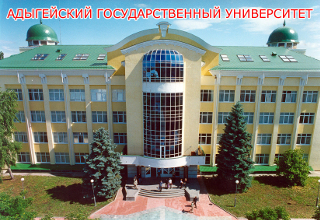
Address: 385000, Maikop, Adyghea Republic, Pervomayskaya Street, House 208. Ph.: 8(8772) 52 48 55
|
|
#1 / 2025
History
Saniye AKCA
THE CONCEPT OF SPATIALIZING CULTURE WITHIN THE THEORY OF “ETHNOGENESIS” (THE EXAMPLE OF CIRCASSIAN SOCIETY)
Culture is an important variable in shaping the environment and the main determinant in human-nature interaction. Culture and social values create a system of rules and habits. The lifestyle is embodied through this system and is reflected in the spatial environment in relationship with nature. Ethnogenesis deals with the historical process that societies go through from their inception to their disappearance. According to this theory, the relationship between society and nature and its reflection on living areas play an important role in this process. The article examines the importance of traditional culture, which is the source of the relationship between society-nature-space, within the framework of the theory of "ethnogenesis". Living in harmony with traditional cultural elements and respecting nature has a positive impact on the social and spatial structure. With the political, economic and social changes, lifestyle changes have begun, which are reflected in traditional cultural factors. Respect for nature has decreased, social order has changed, and cultural construction have begun to disappear. Circassian society has been studied by example. The decrease in the influence of traditional cultural values of societies and the failure of these values to be embodied and reflected in the built environment lead to the loss of culture and therefore to the destruction of societies.
doi: 10.53598/2410-3691-2025-1-354-17-26
Release date: 29.07.2025
Evgenia E. IVUNINA
THE PHENOMENON OF CONSERVATISM IN THE RUSSIAN SOCIAL PHILOSOPHY OF THE XIX CENTURY
The article is devoted to the conservative concept of Russia's development, which dominated socio-political and ideological practice in the second half of the XIX – early XX centuries. The main theorist of this field was Konstantin Petrov Pobedonostsev (1827–1907). The uniqueness of his personality lay in the fact that he was a very versatile person and statesman: he was not only a major theorist of the conservative trend, an outstanding civil scientist, according to whose works all the law students of the country studied civil law for more than half a century. Unlike representatives of all other ideological trends, who proposed abstract models of the future socio-political and economic structure of Russia, Pobedonostsev was also a practitioner. For a quarter of a century (1880-1905), he was the chief prosecutor of the Holy Synod, taught law to the last two Russian emperors, Alexander III and Nicholas II, and was a member of the country's top leadership, being their "right hand". Pobedonostsev's influence extended not only to issues of church policy, but also to the organization of public education, issues of national and even foreign policy. Based on primary sources, the article analyzes the central provisions of the conservative doctrine, the specifics of their practical implementation, their strengths and weaknesses.
doi: 10.53598/2410-3691-2025-1-354-27-33
Release date: 29.07.2025
Sociology
Elena A. AKULOVA, Ekaterina V. KUDINOVA
DEVELOPMENT OF CROSS-CULTURAL COMPETENCE OF UNIVERSITY STUDENTS THROUGH DESIGN AND RESEARCH ACTIVITIES (USING THE EXAMPLE OF DESIGNING A “DICTIONARY OF CROSS-CULTURAL LITERACY”)
The article examines the complex concept of cross-cultural competence of university students, describes its structural components: cognitive, metacognitive, motivational and behavioral. The relationship between the concepts of "cross-cultural competence", "cross-cultural literacy" and "cultural intelligence" is analyzed, the concepts of "intercultural" and "cross-cultural" are differentiated in the context of interaction of cultures.
The developed model of development of cross-cultural competence of students is described, which is based on project-research activities. The content of all structural components of the model is disclosed, including target, methodological, structural-substantive, technological and evaluative-resultant blocks. Psychological and pedagogical conditions for the effective implementation of the model of development of cross-cultural competence, covering all components of the model, are identified and formulated. The article describes the results of the experimental work on testing the developed model of development of cross-cultural competence of students using the example of the student research interdisciplinary project "Dictionary of cross-cultural literacy" implemented on the basis of the Adyghe State University. Positive dynamics in the development of cultural intelligence of the experiment participants is revealed, which is reflected in the ability to interpret and compare different cultures; to be tolerant towards representatives of other cultures; to respect different opinions, customs and cultural characteristics; to be able to prevent and eliminate cultural conflicts. As a result, the effectiveness of the model of development of cross-cultural competence of student youth designed by the authors of the study is proven.
doi: 10.53598/2410-3691-2025-1-354-34-44
Release date: 29.07.2025
Eva V. ARAKELOVA
THE SOCIO-SHAPING ROLE OF HIGHER EDUCATION INSTITUTIONS IN THE CONTEXT OF DIGITAL TRANSFORMATION: ADAPTATION STRATEGIES
This article explores the transformation of higher education in Russia in the context of global socio-cultural changes. The author examines the dialectical contradiction between the traditional socializing function of the university and the challenges of the digital era, which leads to institutional ambivalence. The methodological basis of the research consists of a systematic and structural analysis, along with the theoretical perspectives of classical and modern researchers in the sociology of culture.
In the course of the research, the author identified three key vectors of higher education transformation: the digital convergence of the educational space, the commodification of academic environment, and the revision of professional identification models. Special emphasis is placed on analyzing the crisis of the educational structure as a social institution, which manifests itself in the contradiction between academic values and market rationality.
Based on the analysis of secondary research, this article argues for the prospects of the "third generation university" model. This model integrates fundamental training, practice-oriented competencies, digital infrastructure, and a developed socio-cultural environment. The article contributes to the development of an integrative concept of university socialization in the context of the increasing complexity of social processes.
doi: 10.53598/2410-3691-2025-1-354-45-49
Release date: 29.07.2025
Elena A. GERBUT, Regina I. SOLENOVA, Daria A. DZHABRAILOVA
RELIGIOUS SOCIALIZATION: FEATURES OF DEVELOPMENT IN MODERN SOCIETY
In modern Russian society, the process of reforming the system of personal value orientations is taking place, and therefore traditional values, a significant part of which are religious values, are of particular interest. However, in post-Soviet Russia, the process of religious socialization acquires a number of specific features. The purpose of this article is to identify the features of religious socialization in modern Russian society. In the course of the work, the following tasks were solved: the features of the process of religious socialization at various stages of personality development were formulated; the specifics of religious behavior of modern Russian citizens were described; the characteristic features of religious socialization in Russia were identified; practical recommendations for correcting the process of interiorization of religious values were proposed.
The article outlines the main factors influencing the development of religiosity among young people. The influence of family, education, socio-cultural environment and information technology is considered. The authors emphasize the importance of fostering religious tolerance among the younger generation of Russians. The following were identified as specific features of Russian religious socialization: multi-confessional; atheistic tradition of upbringing, formed in Soviet society; uncontrolled dissemination of information on the Internet.
doi: 10.53598/2410-3691-2025-1-354-50-56
Release date: 29.07.2025
Alexey E. ZIMIN
NETWORKED SPACE OF PROSOCIAL BEHAVIOUR AS A FACTOR FOR SELF-REGULATION OF VOLUNTEERS (IN STAVROPOLSKY KRAI)
This paper is devoted to the analysis of the formation of prosocial behaviour in network society, which acts as a factor of self-regulation of volunteer activities. The necessity for the emergence of networked space is supported by the fundamental human need to fee significance and adequacy in their social choices. This feeling can be achieved by social interaction which is based on adherence to the code of the networks to which people belong. This interaction should presuppose trust and sincerity between participants in communicative actions. Consequently, within the functional space of social practices, network cohesion forms among network participants. This allows them to demonstrate and perceive the sincerity of each other’s motives. Additionally, social connections exist at a more abstract level in network space, since the code of a given network, within which participants act, represents their common goal. In this context, the goal is to assist society, which is reflected by actors through a process of self-regulation. Self-regulation not only enables the formation of one’s own system of world understanding but also helps to «filter» manifestations of prosocial behaviour that is driven by motives which don’t align with the code of the volunteer network.
doi: 10.53598/2410-3691-2025-1-354-57-64
Release date: 29.07.2025
Osip A. KAZANTSEV
MANAGERIAL TOOLS IN DOCUMENTS AND IN PERSONS: AN INVESTIGATION OF THE IMPACT ON THE SECONDARY GENERAL EDUCATION' QUALITY
The symbolic termination of membership in the Bologna system has renewed the rhetoric about the need to transform educational, educative and managerial activities in the national mass school. Therefore, it seems important to identify not just a set of problems in the functioning of educational institutions, but also to identify the causal factors that generate the whole variety of problematic phenomena.
To carry out such a search, it is necessary to first make a conceptual markup, i.e. choose a methodological framework for developing a research strategy. After such a theoretical step, it will be possible to design a framework for empirical measurements, ensure the adequacy of analytics to the data obtained, and then formulate proposals to eliminate dysfunctions at the Institute of secondary education in Russia. All of these actions are supposed to be implemented within the framework of a study aimed at studying the impact of managerial tools on secondary general education.
Having previously chosen the neo-institutional theory and its managerial implementations as a methodological framework, this article contains an approbation of the further stages of the dissertation research. An analysis of the views of actors (teachers and parents of students) of a secondary educational Russian school regarding the managerial tools used in it is proposed. The conducted study of the regulatory and legal sources forming the managerial toolkit is demonstrated. Both analytical components are based on the materials of two mass surveys in Rostov-on-Don, as well as on the documentary analysis of federal, regional and local sources. The purpose of the research is to identify managerial tools in the management of secondary schools in Russia and to identify the position of teachers and parents of high school students to the discovered tools regarding the impact on the quality of education. To achieve this research goal, it is necessary to solve two tasks. The first is to identify and characterize managerial tools in the institution in question. The second: to identify and investigate the views of the two named actors on the impact of the found managerial tools on the quality of secondary general education. As a result, the conclusion about the predominantly negative nature of such an influence is confirmed.
doi: 10.53598/2410-3691-2025-1-354-65-77
Release date: 29.07.2025
Vera V. KULGAVYUK , Nina Yu. PAVLOVA
INTERCULTURAL COMPETENCE AS A NECESSARY CONDITION FOR ESTABLISHING A PRODUCTIVE DIALOGUE WITH FOREIGN STUDENTS AT THE UNIVERSITY
The relevance of the theme, which the article is devoted to, is that one of the requirements for modern universities is an increase in the number of foreign students from both near and far abroad countries. Adaptation of foreign students to the educational environment of the university and to the peculiarities of the host culture is largely due to the cultural experience of students in the field of intercultural communication, the success of which is determined by the presence of intercultural competence in foreign students.
The problem of the study is that entering the university, foreign students are forced to engage in active intercultural communication, the focus on which remains a poorly studied aspect, which subsequently affects academic performance.
The purpose of the study is to identify the level of intercultural competence of foreign students at the initial stage of study at the university.
Research methods. The self-assessment test of attitudes towards intercultural communication, developed by J. Newlip and J. Makonski, which allows determining the level of intercultural competence in foreign students is presented.
Results. The analysis of self-assessment by foreign students of their attitude towards intercultural communication showed that the affective component of intercultural competence can be divided into three visible levels: high, medium and low. The low level of intercultural competence is due to the lack of adequate knowledge of the Russian language and weak communication skills in a multicultural environment.
Key findings. At the initial stage of training foreign students at a university, it is necessary to determine the level of their intercultural competence in order to develop special programs for its formation in students with a low level, which will improve the quality of the education received.
doi: 10.53598/2410-3691-2025-1-354-78-84
Release date: 29.07.2025
Madina Z. MAGOMEDOVA
THE ROLE OF HISTORICAL MEMORY AND MODERN NARRATIVES IN PERSONAL IDENTIFICATION
The article considers the phenomenon of identity through the prism of the past and the present. The author examines the problem of personal identification in the context of essentialist and constructivist approaches. Within the framework of essentialism, identity is defined by basic characteristics such as uniqueness, stability, belonging to a group, historical memory, common psychological traits and behavioral attitudes. The constructivist approach sees identity as a category based on the meaning-making and self-determination of individuals. In the process of human identification formation, memory plays a significant role, suggesting possible behavioral patterns based on past experiences. Images of the past participate in the construction of identity and are transformed under the influence of new realities. The specificity of identification in the digital space is that traditional identification markers are replaced by new ones. In the modern world, a person is replaced by a digital avatar, which may or may not coincide with a real person. The author advocates an integrated approach to creating a holistic identification portrait of a modern person as an integrated system, the formation of which is conditioned by historical developments, the construction of social reality, and the set of narrative practices generated by digitalization and globalization.
doi: 10.53598/2410-3691-2025-1-354-85-95
Release date: 29.07.2025
Timur A. MAMISHEV
NON-STATE EDUCATION AND PARENTING MODELS IN A LARGE CITY
The segment of non-state general education in Russia is quite stable and demonstrates a constant increase in the number of students and the number of schools. The analysis of educational statistics and the results of various sociological studies shows that most private schools are located in cities and are in demand due to the expansion of the variability of parent-child relationship models and ideas about the educational process. Most often, non-state education is oriented toward a middle-aged parent living in a large city with higher indicators of economic and symbolic capital. The author notes the insufficient level of representation of non-governmental educational institutions in rural areas and small towns of Russia. The parenting model that determines the choice of a private school is characterized by the following characteristics: involvement in the issues of the child's academic performance; priority of his physical and psychological comfort at school; focus on entering a university; an individual approach to learning; high quality of education; the presence of additional sections at school; partnership between parents, teachers and school management.
doi: 10.53598/2410-3691-2025-1-354-96-106
Release date: 29.07.2025
Tatyana N. PODDUBNAYA, Olga V. AGOSHKOVA, Natalia V. ABREGOVA, Alena A. BORCHAKOVSKAYA
POPULARIZATION OF FAMILY VALUES BY MEANS OF EVENT TOURISM (BASED ON THE MATERIALS OF SOCIOLOGICAL RESEARCH)
For many centuries, the family has been formed as the main social and biological model of human existence and reproduction, performing the functions of accumulation and transmission of the civilizational experience by its members. In any society, family values and traditions play a significant role in shaping the worldview, educating the younger generation and ensuring its well-being in the future. Traditional family values fulfil the role of a foundation on the basis of which every family is born. They lay a common life guideline, promote the development of trusting relationships, form harmonious interaction between family members. This article is devoted to the actual scientific problem – popularization of family values by means of event tourism. It contains the author's view on the promotion of traditional family values through the prism of event tourism (on the example of the celebration of the Day of Family, Love and Fidelity in Krasnodar). The authors on the basis of the results of sociological research revealed the potential demand for the proposed recreation program, identified consumer preferences, which formed the basis for the design of this program. The conclusion about the potential demand for the developed recreation program among guests and residents of the city of Krasnodar, as well as its significance in the activities to promote traditional family values and education of young people is formulated.
doi: 10.53598/2410-3691-2025-1-354-107-114
Release date: 29.07.2025
Zaurbek M. SABANOV
THE ESSENCE AND CONTENT OF SOCIO-ECONOMIC PROBLEMS OF DISABLED PEOPLE IN MODERN SOCIETY
The article examines the essence and content of the problems of the disabled in modern society, reveals the main directions of rehabilitation of the disabled, presents the defining terms and concepts that reveal the current trends and substantive foundations of the social protection of the disabled, including the issues of social adaptation and integration, as well as the organization of medical and social expertise as a priority direction of the state policy in relation to the disabled. Comprehensive social rehabilitation includes a sufficiently complete compensation for the needs of disabled people in services aimed at the prevention and treatment of functional disorders and limitations of vital activity. The study allowed us to conclude that in order to solve the problems of people with disabilities, it is necessary to improve the quality and accessibility of medical and social expertise, as well as to finalize some regulations in the field of rehabilitation and social integration of people with disabilities, in accordance with the International Classification of Functioning (ICF). One of the main trends in modern legislation on the social protection of persons with disabilities should be the transition from the medical model of disability to the model of social integration. The current focus is on the recognition and definition of disability based on medical diagnosis and assessment of functional limitations. However, in the modern approach to the social protection of the disabled, the decisive role should be played not only by medical criteria, but also by the social conditions in which the disabled live and function.
doi: 10.53598/2410-3691-2025-1-354-115-121
Release date: 29.07.2025
Madina M. SHAKHBANOVA
MORAL ORIENTATIONS OF DAGESTAN YOUTH
Modern Russian society is faced with a crisis in the moral sphere, which is expressed in the erosion, sometimes loss of many moral principles that form the basis of society, therefore, the study of the moral orientations of the younger generation is an urgent problem. Destructive processes occur despite the increasing weight of religious teaching, which is based on the importance of observing moral rules in society. The object of the study is Dagestan youth. The subject of the study is the moral orientations of Dagestan youth. Empirical evidence shows that the Dagestani youth surveyed are aware of the importance of moral postulates and the need to comply with them. An important role in the preservation of moral principles, however, their transmission to subsequent descendants is played by the older generation. Moral parameters are the basis for classifying the state of morality of Dagestan youth. The judgments "giving and receiving bribes", "violation of laws", "evasion from military service, desertion", "political murder", "treason" are indicators of measuring the nature of human relationships, on the one hand, and power, on the other. The rejection of these actions on a personal level indicates the existence of intolerance towards them in the mass consciousness of Dagestan youth. A vivid confirmation of the value of human life is the designation by the respondents of fears for personal and close people's safety, as well as the fear of losing them, moreover, both of these parameters dominate the material component with great advantage. The norms of behavior in a person's personal life, or rather the inadmissibility of committing many negative acts, indicates the importance for the younger generation of Dagestanis of moral rules in the communication process, that is, they emphasize the priority of high standards of moral behavior.
doi: 10.53598/2410-3691-2025-1-354-122-133
Release date: 29.07.2025
|